Mastering minimalist plant-based recipes is less about the labor of the stove and more about the precision of the assembly, treating every crisp radish and curled scallion as an architectural element for the spring table.
“Plants are the architects of the table. Stop dressing them and start building with them.”
Most plant-based hosting fails because it lacks “heft.” If you just serve a bowl of loose leaves, it feels like a side dish. To make it a [SHARP] centerpiece, you must focus on the Structural Integrity of the plant. We are scouting for vegetables that can stand on their own—literally. By mastering these minimalist plant-based recipes, we move from “cooking” to “composition.”
Affiliate Disclosure: As an Amazon Associate and member of other affiliate programs, I earn from qualifying purchases made through links in [THE EDITS]
1. The Monochrome Crunch: The Base
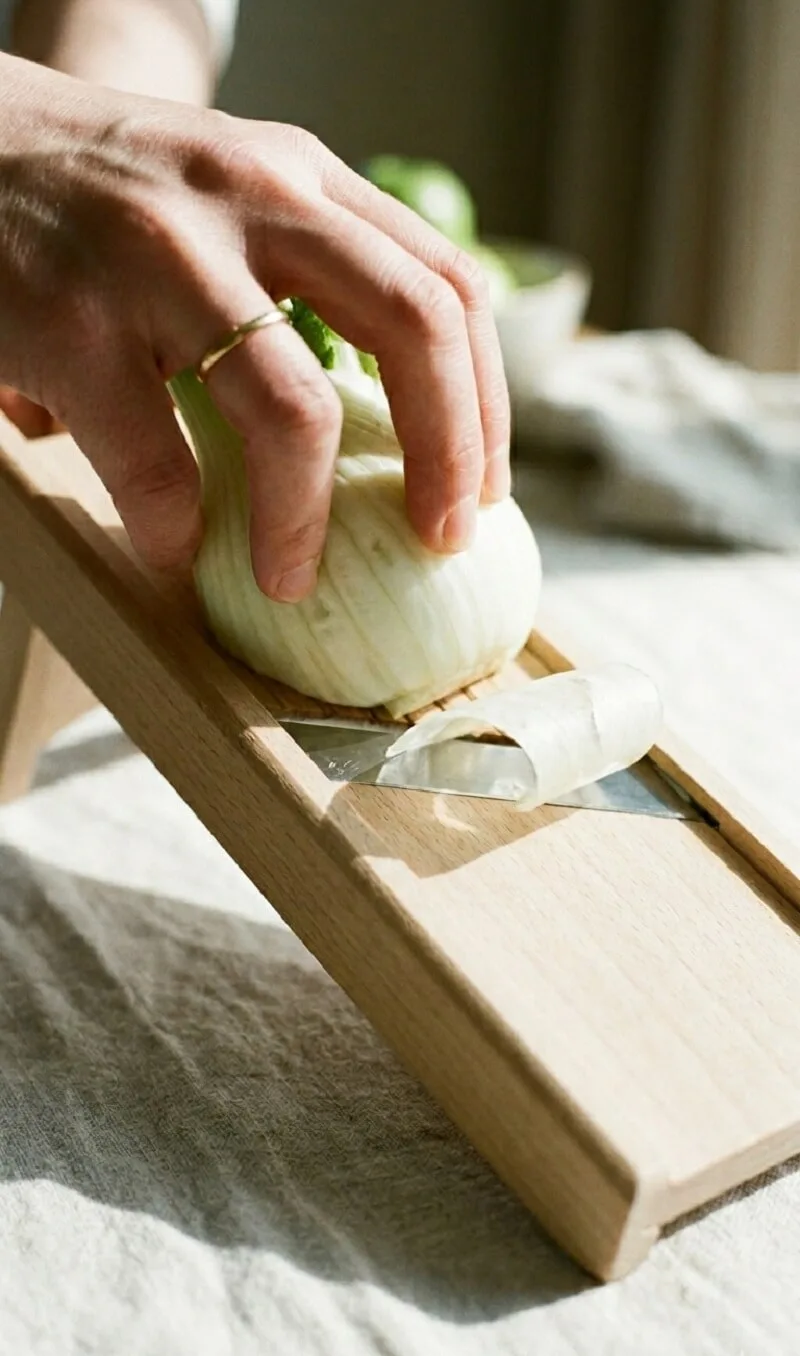
The Deep Dive: Forget the “rainbow salad.” A curator knows that a single-color palette looks more expensive. When developing minimalist plant-based recipes, we are looking for High-Tension Greens: Fennel, Celery Hearts, and Belgian Endive.
The Curator’s Insight: Use a mandoline to create “Translucent Sheets.” When fennel is sliced so thin it becomes see-through, it loses its “toughness” but keeps its “snap.”
“To achieve this specific transparency, I use this Japanese-style Mandoline.”
SHARP NOTE
“The “Ice-Shock” Mandate. After slicing your structural greens, submerge them in a bowl of filtered water and 20 ice cubes for 15 minutes. This creates “Cellular Turgor”—the plant cells swell, making the vegetable curl and crisp into a 3D shape that holds its own height on the plate.“
“For the Ice-Shock, you need a vessel that holds the cold. I prefer these KitchenAid Stainless Steel Mixing Bowls.”
2. The Fat-Cap: Adding Heft to Minimalist Plant-Based Recipes
The Deep Dive: For minimalist plant-based recipes to feel “Sharp,” they need fat to provide a textural anchor. Instead of hidden oils, we use a “Fat-Cap”—a visible, creamy layer that supports the structural greens.
The Curator’s Insight: Scout for “Cultured Cashew Creams” or a very firm “Silken Tofu.” Instead of mixing it in, spread a thick, flat disc of the cream on the bottom of the plate.
SHARP NOTE
“The “Dusting” Finish. To bridge the gap between the cream and the crunch, use a “Dehydrated Brine.” Take high-quality olives or capers, pat them bone-dry, and finely mince them until they are almost a powder. Dust this over the Fat-Cap. It provides the salt without the moisture.”
3. The Vertical Allium: The Architecture of Minimalist Plant-Based Assemblies
The Deep Dive: We are moving beyond the chopped onion. We want the “Architecture of the Allium”—long, elegant lines that draw the eye upward, a hallmark of well-executed minimalist plant-based recipes.
The Curator’s Insight: Scout for Scallion Ribbons or Chive Batons. Take the green tops of scallions and slice them lengthwise into hair-thin threads. Drop them into your Ice-Shock bowl.
SHARP NOTE
“The “Spiralized Tension.” When those thin scallion threads hit the ice water, they will curl into tight “Architectural Spirals.” Perch these on top of your assembly. It adds 3 inches of height and a “Scouted” professional finish.”
IV. [Curating the Global Scout Guide for Minimalist Plant-Based Recipes]
The “Snap” Test:
When scouting produce for minimalist plant-based recipes, bend it. If a carrot or stalk of celery bends without breaking, it has lost its “Structural Integrity.” Leave it. We only buy what “snaps.”
The “Negative Space” Plating:
In a Structural Assemblage, the plate is as important as the plant. Leave 40% of the plate empty. This is “Editorial Breathing Room.” It tells the guest that the vegetable is a piece of art, not just a meal.
The “Dry-Touch” Rule:
Never serve an assembly that is “wet.” Use a spinner, then a linen towel. The dressing should “cling,” never “pool.”
V. The Sharp Glossary: plant-based Edition
- “Structural Assemblage”: A plant-based dish built with height and tension rather than tossed in a bowl.
- “Cellular Turgor”: The ultra-crisp state of a vegetable achieved through an ice-shock bath.
- “The Fat-Cap”: A dedicated, visible base of cream or fat that provides the “heft” to a vegetable dish.
- “Editorial Breathing Room”: The intentional use of empty space on a serving platter to elevate the visual value of the food.
THE SPRING BLUEPRINT series
- The Philosophy: [Spring Hosting for the Chilled Kitchen]
- The Provisions: [The Pantry Edit]
- The Vessels: [The Glassware Edit]
- The Greens: [The Plant-Based Edit]
A New Way to Gather
A well-scouted assembly is all about the mix. High and low, store-bought and hand-styled. I hope this blueprint makes your spring gatherings feel a little more intentional this year. Happy hosting.
Stay Sharp, — Joan