Hosting an effortless assembly begins long before your guests arrive, rooted in a few spring hosting pantry essentials that allow you to maintain your cool while the kitchen stays chilled.
A well-stocked pantry makes spring hosting easier to manage. Instead of planning multiple dishes, you start with ingredients that are ready to assemble and easy to combine.
This guide focuses on spring hosting pantry essentials you can rely on for simple, repeatable setups. You’ll learn what to stock, how to group items, and how to turn your pantry into a table without overplanning.
These spring hosting ideas become easier when your pantry is already prepared. The goal is to keep your hosting structured, flexible, and easy to execute.
I. The Philosophy: Why No-Heat Hosting is the Spring Essential.
Spring hosting should feel like the season itself: light, effortless, and entirely unburdened. For years, I believed that a ‘proper’ host had to be tethered to the kitchen, checking timers and hovering over a hot stove while the real magic—the conversation—happened in the other room.
No-heat hosting is the intentional decision to trade the stovetop for the scout. It is a philosophy built on three [SHARP] pillars:
- Presence Over Preparation: When you remove the ‘cooking’ element, you remove the stress of timing. You are no longer a chef; you are a curator. This allows you to be fully present with your guests from the moment they walk through the door.
- The Beauty of the Raw State: Spring offers us the best textures of the year—the snap of a sugar pea, the creaminess of a young goat cheese, the brine of a chilled olive. Heating these ingredients often masks their vibrance. By serving them in their ‘No-Heat’ state, you honor the ingredient’s integrity.
- Architectural Simplicity: Without the clutter of pots, pans, and serving platters for hot food, your table remains clean and minimalist. We use [BODEGA GLASSWARE] and low-profile boards to keep the visual line open, making the food look like a curated gallery rather than a heavy feast.
Once you embrace the freedom of a cold kitchen, the next step isn’t just buying more groceries; it’s about organizing your ingredients into a functional hierarchy. This is where the 4-Part Category System transforms your pantry from a storage closet into a hosting toolkit.
II. The Spring Hosting Pantry Essentials (What to Stock)
A well-stocked pantry is the quiet engine behind every successful ‘no-heat’ gathering. This is how I build a no-heat pantry for hosting without overcomplicating the process.
THE 4-PART PANTRY LOGIC:
- The Anchors (Proteins): Curated cheeses, high-quality deli finds, or the perfect six-minute egg.
- The Foundations (Bases): Artisanal crackers, stone-ground flatbreads, or simple sourdough wraps.
- The Structure (Fresh): Seasonal fruits and crisp vegetables that provide the essential ‘snap.’
- The Accents: Small-batch dips, toasted nuts, or a bright olive tapenade.
This simple structure is what makes spring hosting pantry essentials easy to use and repeat for any gathering. Once you have these in place, you can start building from your no-heat plant-based setups and mix combinations without overthinking.
III. How to Build a Table from Your Pantry
Once your pantry is stocked, the next step is turning those items into a table you can serve with ease.
- Step 1: Start with a Base. Choose crackers, flatbreads, or simple wraps. This gives your table structure.
- Step 2: Add One or Two Proteins. Use cheese, eggs, or plant-based options like hummus or beans. This adds substance.
- Step 3: Include Fresh Elements. Add fruits or vegetables for texture and contrast. Pair this with your no-heat plant-based setups for a lighter table.
- Step 4: Add One Accent. Use nuts, spreads, or a simple dip to complete the setup.
- Step 5: Keep It Balanced. Limit the number of items so your table stays clean and easy to manage.
This is how spring hosting pantry essentials turn into a complete setup without extra planning.
IV. A Simple Spring Pantry Setup
Here’s a clear example you can follow without overthinking.
- Serves: 4–6
- Base: seeded crackers
- Protein: soft cheese and boiled eggs
- Fresh: grapes and sliced cucumbers
- Accent: mixed nuts
- Layout: group items in small sections and keep spacing open
This setup shows how spring hosting pantry essentials come together in a simple, balanced way. You can serve this with a minimalist table setup with glassware for a clean presentation.
V. What to Buy for a Last-Minute Spring Gathering
If you need to pull a table together quickly, focus on a few reliable items you can find easily.
- Crackers or flatbreads
- One protein (cheese, eggs, or hummus)
- Fresh fruit
- One dip or spread
- Nuts or a simple garnish
This keeps your spring hosting pantry essentials focused and easy to assemble on short notice.
THE SPRING BLUEPRINT SERIES
A simple system for effortless hosting. Each part builds on the next so your table comes together without stress.
-
The Philosophy
Spring Hosting for the Chilled Kitchen -
The Provisions
Spring Hosting Pantry Essentials for Easy No-Heat Entertaining -
The Vessels
Simple Glassware Setup Guide -
The Greens
No-Heat Plant-Based Setups
Use this simple pairing method to turn your spring hosting pantry essentials into a complete table without cooking.
VI. How to Combine Spring Pantry Items Into a Table (Simple Pairing Guide)
The Pairing Shortcuts
1. The Luxe Smoked Edit
If you buy Smoked Trout → Pair with Radishes and Sea Salt Crackers.
Joan’s Tip: The bitterness of the radish cuts the oil of the trout perfectly. It’s a sophisticated, no-cook starter that looks curated, not just “opened.”
2. The Creamy Garden Snap
If you buy Whipped Feta → Pair with Sugar Snap Peas and Torn Flatbread.
Joan’s Tip: Keep the peas raw for a “snap” that contrasts the creaminess of the feta. It’s the ultimate texture-first spring bite.
3. The Sharp Orchard Board
If you buy White Cheddar → Pair with Green Apple Slices and Marcona Almonds.
Joan’s Tip: This is your “Anchor” pairing. The tart apple wakes up the sharp cheese, while the almonds add that essential salty crunch.
[ THE GLOBAL SCOUT GUIDE ]
Once you master the 4-part logic, you can travel the world without leaving your pantry. Use these three ‘Global Scouts’ to give your assembly a specific cultural point of view:
The Mediterranean Scout:
Anchor: Tinned Sardines or Feta
Accent: Castelvetrano Olives or Za’atar
The Nordic Scout:
Anchor: Smoked Salmon or Pickled Herring
Accent: Grainy Mustard or Pickled Red Onions.
The Alpine Scout:
Anchor: Gruyère or Prosciutto.
Accent: Cornichons or Fig Jam
VII. Common Mistakes in Building a Pantry Table
Even simple tables can feel overwhelming when a few details are missed.
- Using too many items
- Skipping a base or protein
- Overcrowding the table
- Not balancing textures
Keeping your spring hosting pantry essentials simple makes your table easier to assemble and serve.
QUICK CHECKLIST: KEEP IT SIMPLE AND BALANCED
- ✓ Choose 1 base
- ✓ Add 1–2 proteins
- ✓ Include fresh elements
- ✓ Add one accent
- ✓ Keep spacing open
This is the simplest way to keep your spring hosting pantry essentials consistent and easy to repeat.
VIII. The Architecture: Organizing Your Pantry by Logic, Not Label.
Once you have scouted your foundations, the final step is their integration into your space. Transition them into clear vessels to maintain the “Quiet Pantry” aesthetic.
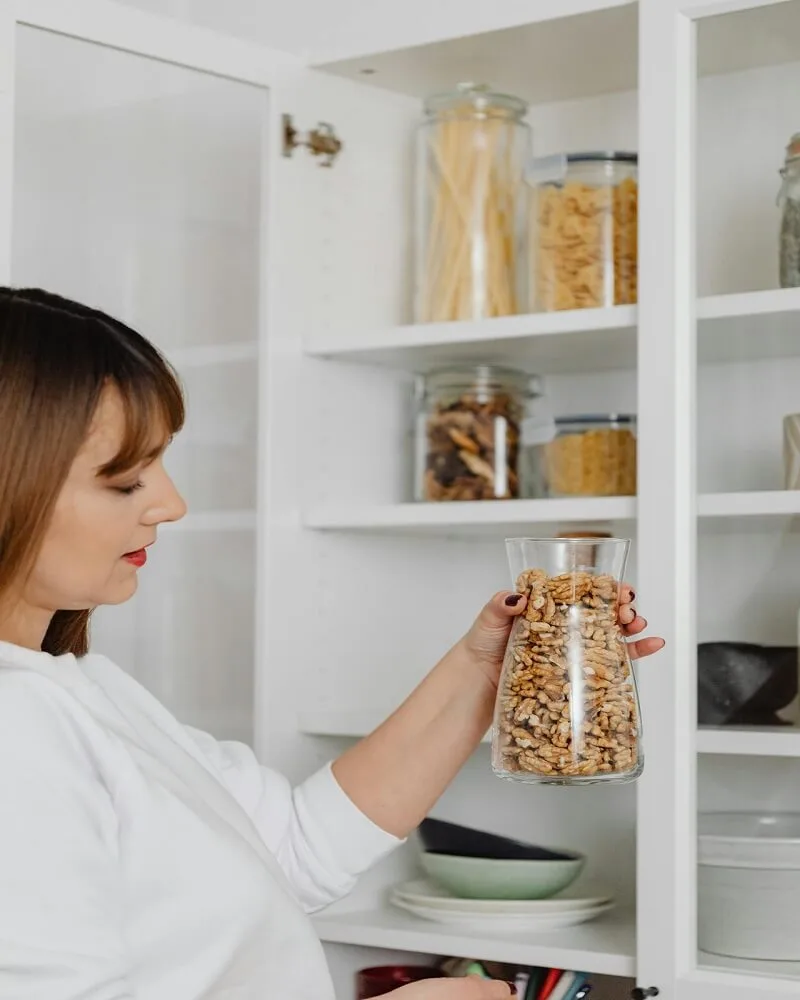
- The Protocol: Transfer dry goods like Marcona almonds into uniform, heavy-bottomed glass jars.
- The Benefit: Beyond the aesthetic, decanting allows you to monitor your “Inventory Levels” at a glance. A Curator never scouts at the last minute; they maintain a constant state of readiness.
SHARP NOTE :
“Dedicate one shelf or bin to each category: Bases, Anchors, and Accents. When you can see your categories at a glance, you can assemble a board in your head before you even touch a plate.”
IX. The Strategy: The Life Cycle Table (Maximizing Your Scout)
The “No-Heat” methodology relies entirely on the integrity of your ingredients. A stale almond or a dry olive breaks the illusion of a sophisticated assembly. Use this rotation guide to keep your pantry Sharp.
| THE FOUNDATION | LONGEVITY | THE STORAGE PROTOCOL | THE DAY 3 “RE-SCOUT” |
|---|---|---|---|
| Clean Protein (Tinned Fish/Deli) | 24 Hours | Transfer to glass; never store in the open tin. | Fold into a “No-Heat” Salad with radishes. |
| Cultured Labneh or Feta | 7 Days | Top with a thin layer of olive oil to “seal.” | Whisk with lemon for a Creamy Base for peas. |
| Marcona Almonds | 4 Weeks | Airtight glass jar to maintain the “Snap.” | Crush over Sharp Cheddar for texture. |
| Castelvetrano Olives | 2 Weeks | Keep fully submerged in original brine. | Chop into a Tapenade Accent for flatbread. |
| Champagne Vinegar | 12 Months | Cool, dark place away from the stove. | Brighten Fresh Fruit or macerate berries. |
X. Example Spring Pantry-Based Setups for Easy Hosting
Budget Pantry Setup for Easy Hosting (Serves 4)
From your pantry
- Crackers
- Peanut butter or spread
- One dip
Fresh additions
- Bananas or apples
- Carrots or cucumbers
Layout:
- Place crackers in one section. Add spreads in small bowls.
- Arrange fruits and vegetables beside them to create contrast.
- Keep portions simple and grouped.
- Use a minimalist table setup with glassware to organize dips and small items.
- This setup works well when paired with your spring hosting ideas for small gatherings.
“I use this exact pantry setup for small gatherings when I don’t want to cook.”
10-Minute Pantry Setup for Easy Hosting
Serves 4 to 6 people
From your pantry
- Flatbread or wraps
- Cheese or spread
- Nuts
Fresh additions
- Grapes
- Cherry tomatoes
Layout:
- Place the flatbread as your base.
- Add cheese or spreads beside it.
- Scatter fruits and nuts in small sections around the table.
- Keep everything within reach to make serving easy.
- You can expand this setup using your no-heat plant-based setups for more variety.
Shop the spring Pantry Edit
This is a curated selection of spring hosting pantry essentials you can keep on hand for more refined setups.
Shop the Spring Pantry Edit
- The Glassware: Stackable Bodega Mini Tumblers
- The Anchor: Wild-Caught Smoked Rainbow Trout (3-Pack)
- The Foundation: Organic Sea Salt Sourdough Flatbread
- The Accent: Roasted Marcona Almonds with Sea Salt
- The Tools: Minimalist White Oak Serving Board
*This post contains affiliate links to my personally scouted pantry essentials. I only recommend the foundations I use on my own table.*
Frequently Asked Questions
A: No-heat hosting is a way of preparing and serving food without using a stove or oven. You rely on ready-to-eat ingredients and assemble them into a complete table.
A: The best pantry items for hosting include crackers, bread, dips, nuts, and spreads because they can be served immediately and combined easily with fresh ingredients.
A: Start with a base like crackers or bread, add protein such as cheese or spreads, include fresh items, then finish with accents using your spring hosting pantry essentials. Use simple spring hosting ideas to keep the setup balanced.
A: Spring hosting pantry essentials are ready-to-use ingredients like crackers, cheeses, fruits, and spreads that allow you to build a table quickly without cooking.
A New Way to Gather
A well-scouted assembly is all about the mix. High and low, store-bought and hand-styled. I hope these Spring hosting ideas blueprint makes your gatherings feel a little more intentional this year. Happy hosting.
Stay Sharp, — Joan