Curating a collection of minimalist glassware for spring table settings allows the seasonal light to become a physical ingredient in your assembly, emphasizing the transparency and ‘Vessel Architecture’ that defines a chilled kitchen.
“The weight of the glass dictates the weight of the conversation.”
In a chilled, no-heat kitchen, your glassware does the heavy lifting that a hot meal usually performs. It provides the “clink,” the sparkle, and the vertical drama. A curator knows that a drink isn’t just a liquid; it’s a study in transparency and light.
Here is how to scout and style your spring vessels with a Sharp eye.
Affiliate Disclosure: As an Amazon Associate and member of other affiliate programs, I earn from qualifying purchases made through links in [THE EDITS]
The Selection: Minimalist Glassware for Spring Table Settings
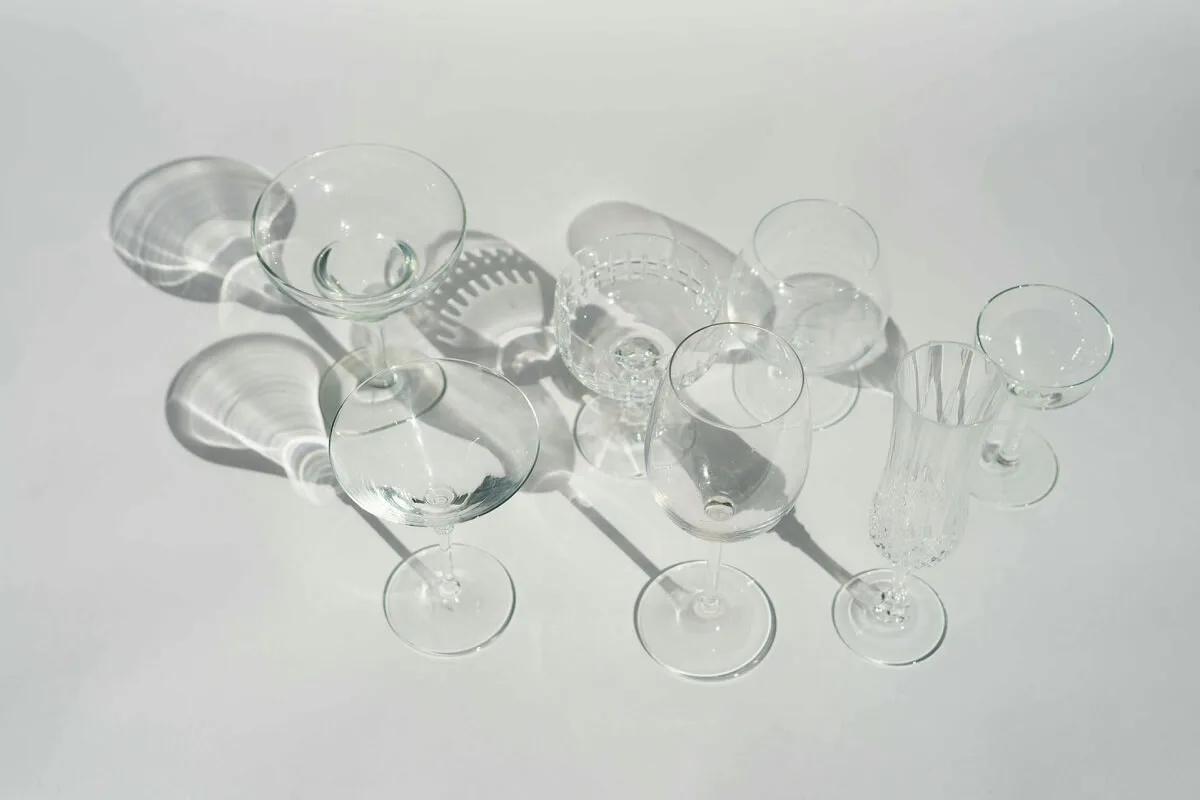
The transition to warmer light requires a shift in our vessels. We look for pieces that don’t compete with the table, but rather frame the clarity of the ritual.
I. 3 Pillars of Minimalist Glassware for Spring Table Settings
1. The “Ghost” Stem (The Ultra-Thin Standard)
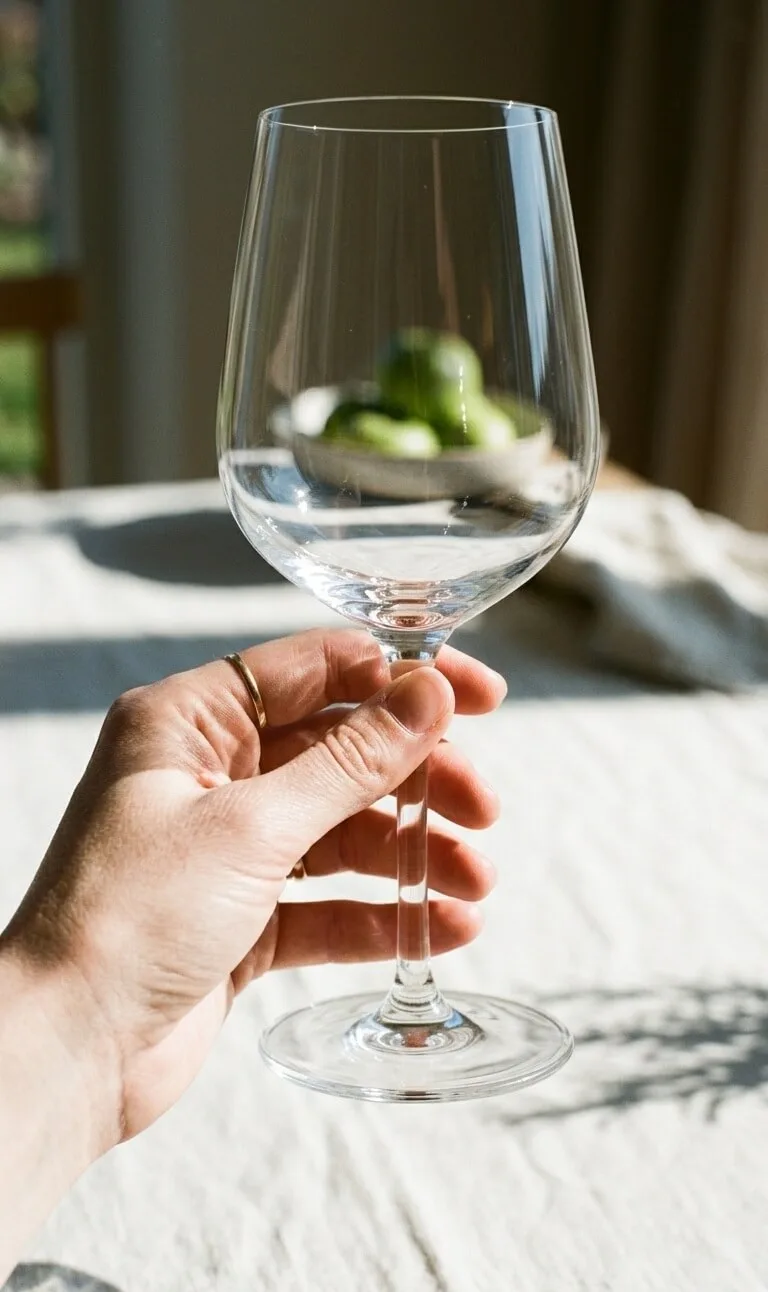
The Deep Dive: When sourcing minimalist glassware for spring table settings, the “sing” of the glass is as important as the silhouette. A thin rim elevates a simple chilled white wine to a sensory event.
The Curator’s Insight: Look for “Cold-Cut” rims. Run your finger along the top of the glass; if you feel a rounded “bead” or lip, it’s a cheap machine-press. A cold-cut rim is flat and sharp. It allows the liquid to hit the palate instantly, without the glass getting in the way.
SHARP NOTE
“The “Stem-to-Bowl” Ratio. Scout for glasses where the stem is at least 1.5x the height of the bowl. This creates a “long-necked” silhouette on your table that mimics the growth of spring flowers.”
2. The “Shorty” Bistro Glass (The Low-ABV Anchor)
The Deep Dive: Sometimes, a formal stem feels too “stiff” for a chilled assembly. Enter the Shorty—a thick-bottomed, 6oz tumblr usually found in French bistros. For your “Shorty” tonics and botanical infusions, look for a low-velocity weight. This creates a grounding contrast within your minimalist glassware for spring table settings.
The Curator’s Insight: These are your “Transition Vessels.” Use them for chilled vermouth or even just a very fancy sparkling water with a single sprig of mint. The smaller volume keeps the drink colder for longer because the guest finishes it before it can reach room temperature.
SHARP NOTE
“The “Frosting” Method. Don’t just chill the drink; chill the Shorty. Place these glasses in the freezer for exactly 20 minutes before guests arrive. The “fog” on the glass acts as a visual cue that the kitchen is officially chilled.”
3. The “Linear” Carafe (The Vertical Anchor)
The Deep Dive: Pitchers are too bulky; they take up “real estate.” A curator uses a linear carafe—a tall, slender glass cylinder with no handle.
The Curator’s Insight: Use this for “Visual Infusions.” Instead of chopping fruit into the water (which looks messy), use a single, long “Ribbon” of cucumber or a whole stalk of lemongrass. Because the carafe is linear, it holds the ingredient upright like a botanical specimen.
SHARP NOTE
“The “Negative Space” Pour. Never fill a carafe to the top. Fill it to the 75% mark. This “negative space” at the top of the glass allows the aromas to bloom and prevents the “heavy-handed” look of a full jug.”
II. The Curator’s Maintenance Kit: Protecting the “Sing” of Minimalist Glassware for Spring Table Settings
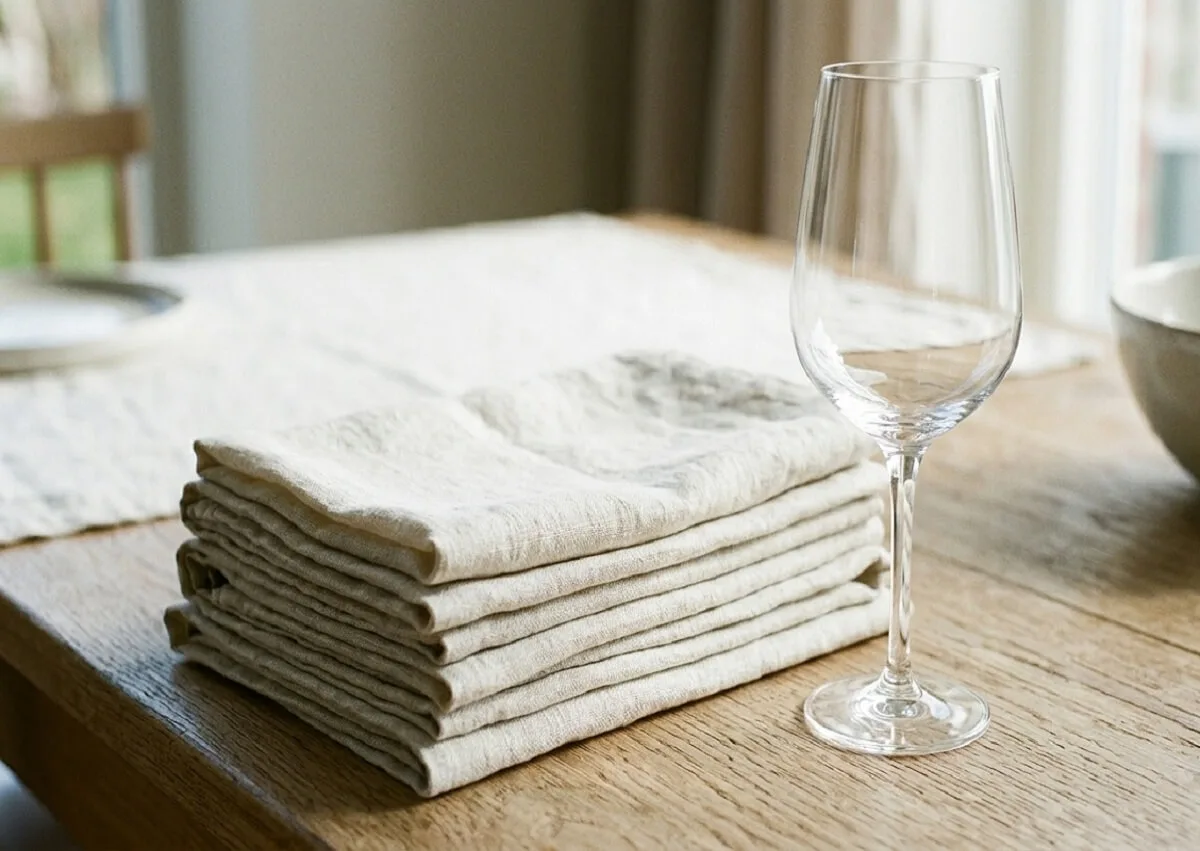
The longevity of these vessels depends on a gentle touch. To preserve the ‘Sing’ and clarity of your minimalist glassware for spring table settings, avoid high-heat dishwashers. Instead, use a soft linen cloth and tepid water—maintaining the cool temperature of the kitchen even during the cleanup.
To maintain the “Editorial Glow” of your collection, here is the maintenance protocol for a Sharp kitchen.
1. The “Zero-Residue” Polish (Microfiber Evolution)
Standard towels leave “lint-clutter.” A curator uses oversized, high-density microfiber cloths (often called “Scrub-and-Glass” cloths).
SHARP NOTE
“Never use fabric softener when washing these. Softener leaves a microscopic waxy film that causes “streaking” the next time you polish your “Ghost Stems.”
The Technique: Use “Double-Hand Polishing.” Hold the base of the glass with one cloth and the bowl with another. Your skin should never touch the glass once it’s clean.
2. The “Steam-Sanitize” Method
Before a guest arrives, you want your glassware to have an “Editorial Glow.”
The Curator’s Insight: Hold the glass upside down over a pot of boiling water for 3 seconds until it fogs up. Immediately wipe it with your dry microfiber. This is the “Steam-Polish”—it removes water spots that a dishwasher simply can’t.
3. The “Stem-First” Storage Strategy
How you store your vessels dictates their longevity.
SHARP NOTE
“Never store “Ghost Stems” rim-down. The rim is the most fragile part of the vessel architecture (especially if it’s “Cold-Cut”). Storing them rim-down traps moisture and stale air inside the bowl.”
The Curator’s Insight: Store them upright, but give them “Breathing Room.” Glasses should never touch. If they “clink” in the cupboard, they are too crowded.
4. The “Vinegar Bath” (The Hard-Water Reset)
In many places (like the Philippines), hard water leaves a “cloud” on glassware over time.
The Curator’s Insight: Once a month, give your “Shorties” and Carafes a “Sharp Reset.” Soak them in a 50/50 mix of warm water and white vinegar for 15 minutes. It dissolves the mineral “cloud” and restores “The Sing.”
III. [THE GLOBAL SCOUT GUIDE: THE GLASSWARE EDIT]
The “Thrift-Scout” Anomaly:
You can often find the best Vessel Architecture at second-hand shops. Look for “Mismatched Sets” that share a single trait—like all having a gold rim or all being the same height. This is “Unified Variance.”
The Sound Test:
When scouting in a store, gently flick the rim with your fingernail. A high-quality glass will “sing” with a long, sustaining ring. A cheap glass will “thud.” We want the sing.
The “Scale” Strategy:
If your table feels cluttered, your glasses are likely too wide. Scout for “columnar” shapes. They take up less “horizontal real estate” but provide more “vertical drama.”
IV. The Sharp Glossary: Glassware Edition
- “Vessel Architecture”: The intentional choice of glass shape to influence the mood of the table.
- “Unified Variance”: Using different styles of glassware that are tied together by one common visual element (color, height, or rim style).
- “The Sing”: The acoustic quality of high-end glass that signals a “Sharp” host.
- “The Shorty”: The essential, low-profile glass for casual but sophisticated sipping.
- “Editorial Glow”: The specific, streak-free sparkle achieved through steam-polishing.
- “Lint-Clutter”: The tiny fibers left behind by inferior towels that ruin the “Ghost” effect.
- “The Sharp Reset”: The monthly vinegar soak to maintain vessel transparency.
THE SPRING BLUEPRINT series
- The Philosophy: [Spring Hosting for the Chilled Kitchen]
- The Provisions: [The Pantry Edit]
- The Vessels: [The Glassware Edit]
- The Greens: [The Plant-Based Edit]
A New Way to Gather
A well-scouted assembly is all about the mix. High and low, store-bought and hand-styled. I hope this blueprint makes your spring gatherings feel a little more intentional this year. Happy hosting.
Stay Sharp, — Joan